From the Best American Poetry Blog:
http://blog.bestamericanpoetry.com/the_best_american_poetry/2011/02/remembering-bill-sullivan-by-roseanne-wasserman.html
Sunday, February 13, 2011

Wednesday, January 5, 2011
Saturday, October 23, 2010
Bill Sullivan, 1942-October 22, 2010
Yesterday morning, our dear friend Bill Sullivan died at Saint Peter's Hospital, Albany, New York, with his partner Jaime Manrique by his side, as well as his close friend Aurora Manuel.
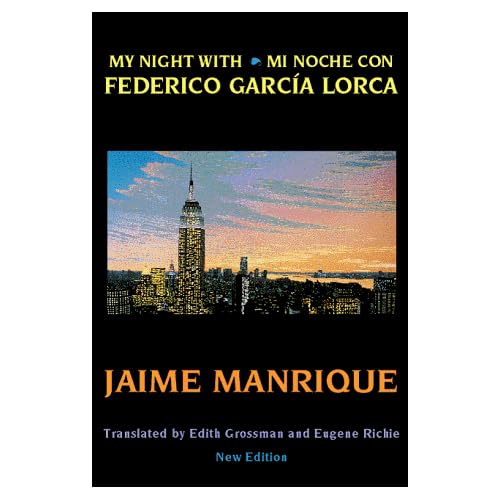
Bill was also a publisher, through his Painted Leaf Press. He published Eugene's collection of poems entitled Island Light, and mine, called Other Selves, as well as many other important titles by New York School writers and poets. We collaborated with him, through The Groundwater Press, to publish Susan Baran's book of poems, The Necessary Boat. Bill's gorgeous image of the New York City skyscape graces the cover of Jaime's book My Night with Federico Garcia Lorca, which Groundwater first published. (It is now in print with the University of Wisconsin Press.)

When Bill introduced Eugene to John Ashbery in 1983, he created a wide new channel for our lives, bringing us into the heart of a vast, vital network of writers and artists. Jamie Manrique had introduced Eugene to Bill while Jaime and Eugene were translating Jaime's poetry. Bill was a St. Lawrence Seaway, an Erie Canal, taking us through time and space, from the Hudson River School of Frederic Church and Olana, into the New York School in Manhattan and beyond.
Our walls are full of his landscape visions, from Niagara Falls to Antisana Volcano. New York Harbor, Cotopaxi, Olana, Paterson Falls, and Manhattan at night: we live with the windows he painted, opening into worlds of exceptional color and detail, scope and variety, light and distance.
http://www.billsullivanpaintings.com/
http://www.jaimemanrique.com/books/the-autobiography-of-bill-sullivan.html
http://www.registerstar.com/articles/2010/04/15/news/doc4bc684a452fc0833334694.txt http://www.registerstar.com/articles/2010/10/26/news/doc4cc64fde76b92359397182.txt
The two urls below will not link through from this blog, but paste them in your browser and try from there:
philipalvare.com/Texts/Bill_Sullivan.pdf
http://www.artoftheprint.com/artistpages/sullivan_bill_hudson_pines.htm
The Groundwater Press was honored to have published the catalogue for Bill's retrospective exhibition in 2006 at the Albany Institute of History and Art. The Autobiography of Bill Sullivan by Jaime Manrique has forty-eight colorplates of Bill's landscapes, from New York City, upstate New York, South America, California, and Cape Cod, and includes both a preface by John Ashbery and a statement by Reinaldo Arenas.
Bill was also a publisher, through his Painted Leaf Press. He published Eugene's collection of poems entitled Island Light, and mine, called Other Selves, as well as many other important titles by New York School writers and poets. We collaborated with him, through The Groundwater Press, to publish Susan Baran's book of poems, The Necessary Boat. Bill's gorgeous image of the New York City skyscape graces the cover of Jaime's book My Night with Federico Garcia Lorca, which Groundwater first published. (It is now in print with the University of Wisconsin Press.)
Painted Leaf Press was an award-winning small press with a wonderful list of titles, a project into which Bill poured his energy and resources for many years: a great gift of invested time and confidence in every author he published.
When Bill introduced Eugene to John Ashbery in 1983, he created a wide new channel for our lives, bringing us into the heart of a vast, vital network of writers and artists. Jamie Manrique had introduced Eugene to Bill while Jaime and Eugene were translating Jaime's poetry. Bill was a St. Lawrence Seaway, an Erie Canal, taking us through time and space, from the Hudson River School of Frederic Church and Olana, into the New York School in Manhattan and beyond.
In the mid-eighties, Bill painted portraits of Eugene and me; mine is on the cover of Other Selves. When our son Joe was thirteen, Bill decided to paint him too, wearing a red Hudson tee-shirt. The painting graced a shop window on Warren Street all that season, and now all three of our portraits are on our living room wall
Our walls are full of his landscape visions, from Niagara Falls to Antisana Volcano. New York Harbor, Cotopaxi, Olana, Paterson Falls, and Manhattan at night: we live with the windows he painted, opening into worlds of exceptional color and detail, scope and variety, light and distance.
We will miss him--his conversation, full of news, plans, discoveries, and traveler's tales; his energy and encouragement; his company and his steady familiar, familial affection.
Below are some links to Bill's work and biography:http://www.billsullivanpaintings.com/
http://www.jaimemanrique.com/books/the-autobiography-of-bill-sullivan.html
http://www.registerstar.com/articles/2010/04/15/news/doc4bc684a452fc0833334694.txt http://www.registerstar.com/articles/2010/10/26/news/doc4cc64fde76b92359397182.txt
The two urls below will not link through from this blog, but paste them in your browser and try from there:
philipalvare.com/Texts/Bill_Sullivan.pdf
http://www.artoftheprint.com/artistpages/sullivan_bill_hudson_pines.htm
Saturday, December 5, 2009
 Having a Party for Planisphere:
John Ashbery’s Reading Thursday Night, 12/3/2009
Eugene and I were at the NYU Law School, but not in the Tishman Auditorium, this ridiculously balmy early December night. Anxious ushers were separating poets from lawyers, sending us into a ballroom off to the right. There were expensive suits and dresses in the formal auditorium, but this was the Greenberg Lounge. We were one hour early, sitting on folding chairs that set rumps at a forward tilt after thirty minutes. Portraits of lawyers, mantelpieces, big old oriental carpets, plaster cartoucheries, and a gilt jug of poinsettias beside the lectern. Two blue bottles of Saratoga water. Before long, it looked like SRO. The bookstore rep set up his table: Planisphere is beautiful, exquisitely designed, cartoon blocks and art nouveau arabesques, and its two-page-spread title page mixes fonts: “JOHN” is like subway graffiti, “ASHBERY” a steampunk goth. Jeff Clark at Quemadura did the book design (read all about him:
http://www.publishersweekly.com/article/CA6525583.html).
John was off in a room somewhere signing copies. The back cover’s a really nice photo of him in front of his leaded-glass double front doors in Hudson, his hands on the back of a Chippendale: Jennifer May took the picture. Poems inside are alphabetical by title.
I love being one of the yentas by now, running around before the reading, kissing old friends as if I were at a bar mitzvah. Hi, Star, Marcella, Maggie! Piotr, Olivier—in town! David Shapiro and David Lehman said happy birthday, which they knew about because of FaceBook. Then Deborah Landau introduced, her students attentive in row two left, in reserved chairs. The director of NYU’s Creative Writing Program, Deborah thanked Lillian Vernon, Fred Hochberg, and the poet Tom Healy for their help, and mentioned the program of conversations with John, running through the spring term. She had recently visited John’s Hudson house, and remarked how it reflected his poetry’s juxtapositions of high culture beside low.
John began (“I was just thinking of how old I am”) by recalling that he’d been new in New York before the NYU Law School building had gone up; a friend had taken a picture of him that winter, in front of the site where they’d demolished old Washington Square brownstones prior to construction. “A very poetic photo, no doubt, in the snow, but I don’t know where it is now.” His voice is still clear, its upstate accent lending angles to the ironies of the poems, read with animation and with humor. As always, he sounded bemused, entertained, surprised, and engaged with the words on the page, as were his listeners. We were a big crowd, but the reading was a glass of champagne in hand for each of us: sparkly, intimate, nicely complex.
He started with poems from A Worldly Country, his last volume from 2007: “The Black Prince,” “Thrill of a Romance,” “Objection Sustained,” “So Long, Santa.” Then he read from Planisphere: “Circa,” “Decembrists” (the “no-see-ums” / “no-goodniks” lines are always fun), “Default Mode” (“They were living in America . . .”), “Episode,” “Floating Away,” “He Who Loves Runs Away” (its title from an operetta by Rudolf Friml, a composer celebrated by Ogden Nash—“I trust your conclusion and mine are similar: ’Twould be a happier world if it were Frimler”), “Idea of Steve,” and “Leave the Hand In.”
He told us that “Pernilla” was published in the New Yorker, but the fact-checkers there kept asking about the title. “It’s a woman’s name,” John would repeat, and they’d say, “Yes, but which woman?” A planisphere is a two-dimensional representation of a round surface, explained the poet; he’d thought he’d found the word for the title of the title poem in a love lyric by John Donne, but it turned out to be from Andrew Marvell’s “The Definition of Love” (http://www.eliteskills.com/analysis_poetry/The_Definition_Of_Love_by_Andrew_Marvell_analysis.php). “Sons of the Desert” takes its title from a Laurel and Hardy short, some of its lines from Antiques Roadshow. “They Knew What They Wanted” is a sure crowd-pleaser, its lines adopted and adapted from one of Leonard Maltin’s film guides. Another movie-title poem title was “They Made Me a Fugitive,” which, he told us, was a great British film, directed by Alberto Calvacanti, but retitled I Became a Criminal when it was released in the United States (http://www.imdb.com/title/tt0039895/). He finished with “The Tower of London,” a comedy; and “The Winemakers,” a longer piece: “We were in a state / called New York, where only bees made sense.”
I think of John’s readings as continuations of the party that started with Kenneth, Frank, and John, with Jane and Jimmy, Larry and Willem, Alfred Leslie and Rudy Burckhart, at Harvard, the Tibor de Nagy Gallery, the Cedar Bar, or back in the apartment by the El, in Southampton, Chelsea, Paris, Hudson. There are martinis and movies and typewriters, art on the walls, and talk. It’s like the party at the end of William S. Wilson’s novel Birthplace:Moving into Nearness, a party described in a letter from a grandfather to his granddaughter:
I have been writing, and I am happy to be able to write, to tell you, Octavia, the words I hear in my head as I write, that we are having a party, and have been for some time now, and we want, with words I am trying to deliver alive from my heart, to invite you. You are welcome to join us in our consonance, at any time, to come as you are, to take potluck with us. Feel free to bring a friend, or partner. Don’t wait until you are ready.
Monday, November 2, 2009
The Art of Ruth Stone: Poetry, Editing, and Collaborating with a Major American Woman Writer

The Art of Ruth Stone:
Poetry, Editing, and Collaborating with a Major American Woman Writer
Society for the Study of American Women Writers
Philadelphia, October 2009
Kandace Brill Lombart chaired this panel, a roundtable discussion on “The Art of Ruth Stone,” last weekend. Undertaking the tremendous task of compiling a bibliography of Ruth’s archives, from publications through manuscripts, photographs, videos, publicity materials, and more, Kandace must be the strongest channel working now—outside of the Stone family circle—for the understanding and preservation of the legacy of this legendary poet. Her description of her project was enlightening, amazing, and deeply moving, as we learned how long Ruth’s poetry has been in the public eye, how much she struggled, how widely she traveled, how far her influences have reached. I was, just today, surprised to find in an old manila folder with notes on Ruth from 1989—the year before I had a son, got a job, and moved to a new city—the urgently penned words: “Find Leslie Fiedler’s student who asked Ruth, ‘Who is the widow’s muse?’!” Twenty years later, there she was: it was Kandace who asked that question, and so started Ruth writing the poem cycle with that title, a work unlike any other in the American canon, one of a very few in the world to meditate on such experience, whose traumatic shock still inexorably moves so many women living out their lives.
As Martha Nell Smith finished her presentation, drawing from her years of research on Ruth, Emily Dickinson, and women’s poetic traditions, she read a few lines from a lullaby that all of us remember: “I Have Three Daughters.” It was the song I’d decided to start my talk by singing, since I knew it from a film called “The Excuse,” made by S. Wolinsky in 1973. Once you hear Ruth sing, you don’t forget it, and Martha and I sang it together then and there, as best we could.
The following is a edited transcription of my talk, which started out as ten minutes of hastily-written memoir from the night before the panel.
I studied with Ruth thirty-five years ago and visited often afterwards. Although I lost touch while in grad school from 1977-86, I asked her to write an introduction for Apple Perfume, the chapbook of my poems published for the Intuflo Series in 1989, and it’s become much easier to stay in touch, since many of the girls, grandkids, even great-grandbabies, are on Facebook. Nora's there, Walter's there; Bianca is running The Ladder Reading Series in New York City; Hillery's teaching at NYU; photos of Phoebe's studio are posted, and a profile picture of Abigail with Chloe.
A book here called Women Poets on Mentorship: Efforts and Affections, edited by Arielle Greenberg and Rachel Zucker, came out from Iowa last year; obviously referencing Marianne Moore and Elizabeth Bishop, there’s no mention of Ruth and her students. But then, Ruth has a volume of her own—the 1990 The House is Made of Poetry, in which articles like Martha Nell Smith’s, Sharon Olds’s, and Jan Freeman’s offer much the same kind of tribute. I finally wrote up a memoir-homage, too, for her eightieth birthday, which appeared in time for her ninetieth, in the American Poetry Review, in 2006. And it’s nice how she’s gone a bit viral on the internet lately, with the lecture by Elizabeth Gilbert (author of Eat, Pray, Love) for TED.com (Technology, Entertainment, Design). Gilbert met Ruth a few years ago, and recalls how Ruth described her muse as a kind of locomotive: when she was a child, out working in the fields, she would feel and hear a poem “coming at her from over the landscape, like a thunderous train of air.” “She’d have to run like hell to the house” to write it down, but didn’t always catch it. Sometimes it would almost escape her, then she’d reach out and “catch the poem by the tail,” “perfect and intact, but backwards, from the last word to the first”
(<http://www.ted.com/talks/lang/eng/elizabeth_gilbert_on_genius.html>; <http://www.youtube.com/watch?v=6zbbOINF-08>).
Some of what Ruth taught me about teaching is pretty standard: “Don’t bring your own work to the seminar; it’s not about you.” But the real work wasn’t in the classroom, anyway, and it was about her in the way in which we were all so in need of mirrors: how many magic mirrors are there, that will speak back something life-changing and memorable forever? As I wrote in that APR article, “Ruth Stone: A Gift from the Universe,”
Stone has always been a stunningly empathetic teacher for poetry seminars, funny and dead serious at once, masterful at the excruciating dance of giving immediate responses to first drafts of student work. This lifelong care for her students shows in "Entering the Student's Poem," from In the Next Galaxy, published when she was eighty-seven. To maintain a focus on her students, she strictly refrained from showing her own poems to classes, but there were plenty of readings both informal and organized, so we all came to know each other's themes and voices. And who else could have given us "Some Things You'll Need to Know Before You Join the Union," a hilarious look at "the poetry factory" in second-Hand Coat? I couldn't get away with my lonesome self-pity around her, because she permitted self-pity: she pitied me even more than I pitied myself, and pitied herself, too; pitied the dogs, the cats, the ants-it was all such a pity!-and then she would laugh out loud. myself, and pitied herself, too; pitied the dogs, the cats, the ants-it was all such a pity!-and then she would laugh out loud.
(<http://findarticles.com/p/articles/mi_qa3692/is_200605/ai_n17172669/pg_2/?tag=content;col1>)
Does anyone know of an earlier source for the wonderful put-down “po-biz,” or did Ruth originate it? I heard it first from her in 1973.
Ruth’s kids were good at this kind of deflationary technique, too: I recall Abigail at age twenty—we called her Blue Jay then—mocking her momma’s poems. “In an Iridescent Time” begins, “My mother when young scrubbed laundry in a tub.” Abigail muttered, with a lilt in her voice, as she passed the potatoes, “My mother, when young, was laundry in a tub.” This gave me, a very staid bourgeouis suburban daughter, a considerable thrill: imagine not only being raised in a house so full of poetry, but even being able to make fun of it! Parody was really paradise. My head’s gotten full of her lines, now, too, but especially the lines making fun of herself and the human condition: growing those weird chin whiskers; the old body hiding in the kitchen and eavesdropping on the teenagers; the salt complaining about how degrading it is, the way they pinch her.
Ruth took a similar line with me, who needed a good shaking out, all Bouvard et Pecuchet as I was. When I first came to visit, in 1974, at her mountain cabin home in Goshen Four Corners, she asked me how I like her house: I, who’d never before seen mouse droppings, and when I answered, naiive and secure, ‘It’s kind of a mess, isn’t it?”—then, as her brow darkened, “. . . but, I mean, a creative mess”—she delivered a quick corrective talk to me, about a woman’s life in the art: hard work, danger, loss, being lost, cold comfort, and your children making fun of you at dinner. At ninety-four, she’s mellowed, though—I think. She’d appreciate the bioneurologist’s insight, that dopamine, accessed by a shock, makes neurons write to disk: if it hurts, you’ll remember it better.
It’s not enough to have talent, or time, or connections, or luck, or even five hundred a year and a room: you have to be able to hear that train a-comin’. Not everyone does, or can. It’s a spirit power.
Saturday, September 12, 2009
Miriam Haskell


Miriam Haskell (1899-1981) designed jewelry and created a company that still bears her name. Born in a small Indiana town on the banks of the Ohio River, not far across from Louisville, where she is buried, she came to New York City in the early twenties, with $500 borrowed from her father. Her small shop became a sensation, carrying affordable costume pieces created from glass and gold-plate brass, with designs of a richness and complexity never before imagined.
Haskell's life story, triumphant and heartbreaking, is the center of a new, not-yet-published book of poems by Rosanne Wasserman. Below is the first poem of the book:
Bijoux de l’Heure
. . . and the world was not young any more, but only some of the women wore jewels. All of them were ladies now, and wanted decorations, things to sparkle on their hands and collarbones and ears. They had their own property, and they wanted more. They saw other beautiful ladies, goddesses, sparkling in Paris and Hollywood. They kept a sharp eye on the avenue, knowing that that’s where their dreams would appear.
Miriam lived by the river, then she left and traveled north. She carried a forest, a garden, a love of gold, and her own two hands. She was going to teach the children, but she could not learn the steps, so chose a new path. She went to the city instead, where her childhood ruffled the dreams of others.
Miriam gave them the forest first, oak leaves and snail shells. Gold encased spider and cobweb, tortoises and dragonflies. Colored wooden flowers hung from chains. It was American, but it was not Grant Wood. It was Midwestern meadow and Jewish art. Her hands were Byzantine; they knew midoriental fashions. She rented an avenue storefront near the McAlpin Hotel; she wrote her name by hand on a window card. Her shop was a fractal of the old McAlpin’s Marine Grill, a terra cotta cavern at Herald Square. Chanel had just opened a grand canal of beauty and desire, true lies of poured glass gems in settings stolen from the past; but by the thirties, she worked for De Beers. What was a typist to do, walking home from work down Thirty-fourth Street, set on spending any slack in a distasteful paycheck? What rhythmic swinging counterweights could she hang on her earlobes, what sling around her neck to hide necessity’s steel collar, what loop on her wrists to charm unhappy eyes while her fingers flew? What home-bound mom could exit Macy’s without stopping by the small boutique?
Everything flashed in the spotlights, and nothing was real. It was paste and plating, brass and foil, faceted glass. Four small hands reached from the walls, their white white fingers hung with white enameled chains, faux pearls, and strings of gilt-brass beads. The women stopped in front, then walked inside, and word got round: chic, unique, and beautiful for sale. Gorgeousness and craftsmanship and glitter at a price they could afford. Something to talk about.
For more info, see The Best American Poetry Blog: http://thebestamericanpoetry.typepad.com/the_best_american_poetry/2009/10/miriam-haskell-and-me-by-rosanne-wasserman.html
and please contact @ zannie@aol.com.
GERRIT HENRY, The Time of the Night Forthcoming from the Groundwater Press

A long-awaited project is at last once more underway: we will soon publish Gerrit Henry's posthumous selected poems, edited and introduced by Marc Cohen, his literary executor. The Time of the Night: Selected Poems by Gerrit Henry will also offer the introductions written for Gerrit's earlier books by John Ashbery and David Lehman. The cover will feature a portrait of Gerrit from Alex Katz's 1977 painting "Place," now at the Whitney Museum. Look for a new book announcement by 2010!
Monday, March 9, 2009
Rosanne's Publications and Poetry Work
ROSANNE WASSERMAN
zanwasserman@gmail.com
67 Edgewood Road, Port Washington, NY 11050
PUBLICATIONS
POETRY
Poetry Books
Miriam Haskell (forthcoming).
The Shoemaker’s Children (forthcoming).
Learning to Swim in the Ocean (forthcoming).
Psyche and Amor, collaboration with Eugene Richie (Amherst: Factory Hollow Pres, 2009).
Place du Carousel, collaboration with Eugene Richie (Vilna: Zilvinas & Daiva, 2000).
Other Selves (New York: Painted Leaf, 1999).
No Archive on Earth (New York: Gnosis Press, 1995).
The Lacemakers (New York: Gnosis Press, 1992).
Apple Perfume, Intuflo Editions (New York: Groundwater Press, 1989); introduction by Ruth Stone.
Willing Suspensions (Bloomington, IN, 1975).
Pomes (Louisville, KY: Innominate Press, 1971).
Poems in Journals and Magazines
“For Dara.” Thumbnail 1 (April 2010). Print.
“Limits” and “Steak & Eggs.” Video recordings for THEthe Poetry (December 2010).
“Limits” and “Steak & Eggs.” Video recordings for THEthe Poetry (December 2010).
“Limits.” THEthe Poetry (November 2010).
“Stringing the Crinoids.” notnostrums 4 (2010).
“Missed Call” in Pirene’s Fountain (October 2009).
“Qui Vive, Qui Vire,” Pirene’s Fountain (May 2009).
Six Choices from “Sonnets from the Brazilian,” Specs Journal 2.
“Our Lady of Quelques Choses,” “Local Soul,” and “Learning to Swim in the Ocean,” Cimarron Review 158 (2007).
“Grove,” “Joy,” and “ Forgetfulness,” Electronic Poetry Journal 7 (2004).
“Spirit” in GoodFoot Magazine 5 (20030.
“Why Poetry?” in Hear This (2002).
“Listening to Reason,” “Afikomen,” “Visionary Menus,” “Already in the Fire,” and “Stay Home,” Slope 17 (2002).
“Montage Sequencing” in Can We Have Our Ball Back? 13, canwehaveourballback.com.
“Laps” and “Finish” in Shampoo 15 (2002), .
“Sparkly Moon” and “The Last of January on the Hudson” in GoodFoot Magazine 2 (2001).
“Here Are Your Options,” Bad Henry Review, 1998.
“Crepes Dentelles,” “The Combs” (with John Ash), “Eurydice in Love,” “Sappho’s Hymn to
Aphrodite,” and “Journal Entry (May 10, 1994),” Online edition of Poetry New York (1998).
“Cut to the Chase,” Caprice, 1997.
“Journal Entry,” Poetry New York, 1997.
“Swansneck Valentine” and “A Perfect Sleeping Night,” Private, 1996.
“Inuit and Seal,” “A Fine Romance,” and “Sunset with Venetian Blinds,” Gnosis (Moscow), 1995.
“Caffeine,” Caprice, 1995. (Also featured in cover photograph in this issue.)
“The Hawthorne Circle,” Caprice, 1995.
“Fire-Ender,” “Wings Will Fly You,” “At Diamond Park,” collaborations with Eugene Richie,
Private, 1995.
“Ship’s Medicine,” Lingo, 1994.
“A Personal Friend,” Caprice, 1993.
“Putting in a Word,” Boulevard, 1993.
“Shanghai Lil,” Private, 1992.
“The City of Beautiful Circles,” American Letters and Commentary, 1991.
“Thank You for the Present, Those Two Books”; and “Departure for Cythera,” a collaboration with John Ash, Joe Soap’s Canoe, 1990.
“Crepes Dentelles,” Poetry New York, 1989.
“Pillow Dreams of a Woman She Loves,” Caliban, 1989.
“View from Jane’s Window,” Mudfish, 1988.
“Sappho’s Phainetai Moi” and “A Reading of Agathias,” Mudfish, 1987.
“The Greek Revival Columns Long for Rose Street” and “Journal Entry,” Numbers, 1987.
“Buskins and Robins,” “Dark Furniture,” “Interview with Elpenor,” and “Inuit and Seal,” Sulfur, 1987.
“Eurydice in Love” and “The Combs,” collaborations with John Ash, Poetry New York, 1987.
“Valkyrie/Amor” and “What is Love?,” Bad Henry Review, 1987.
“Bread Made of Pearls,” Bookstore Review, 1987.
“A Provinical Synagogue,” Gambit, 1987.
“Women Reading Flesh,” Talus, 1987.
“Hymn to Aphrodite,” Poetry New York, 1985.
“Scotch Jazz,” collaboration with Eugene Richie, City, 1980.
“Thin Air” and “The Order in the Wooden House,” Gnosis, 1979.
“Eight O’Clock in Goshen” and “Laundromat,” City, 1977.
“Early March, Driving to Louisville,” Euterpe, 1977.
“Steak & Eggs” and “A Man in Love with the Color Red,” City, 1976.
Poems in Anthologies
From “Boustrophedon,” Disco Prairie Social Aid and Pleasure Club. Amherst: Factory Hollow Press, 2010.
“Holes in the Plot,” Blood and Tears: Poems for Matthew Shepard, ed. Scott Gibson (New York: Painted Leaf, 1999).
“Holes in the Plot,” Blood and Tears: Poems for Matthew Shepard, ed. Scott Gibson (New York: Painted Leaf, 1999).
“The Hero Herself,” “A Provincial Synagogue,” and “His Craft,” Hardboot: An Anthology of Kentucky Voices, ed. Virginia Shipley, Negative Capability Press.
“Moon-Milk Sestina,” The Breast: An Anthology, ed. Marin Gazzinga (New York: Global City Press,
1995).
“Putting in a Word,” The Best American Poetry of 1994, ed. A. R. Ammons (New York: Macmillan, 1994).
“Spring at Aughwick Creek,” Broadway 2: A Poets and Painters Anthology, ed. James Schuyler and Charles North (New York: Hanging Loose Press, 1989).
“Inuit and Seal,” The Best American Poetry of 1988, ed. John Ashbery (New York: Macmillan, 1988).
Sappho’s “Phainetai Moi” and “Hymn to Aphrodite,” translations, in Humanities I Sourcebook, ed. Joe
Salemi (New York: New York University Press, 1987).
“Three Marches to Miss the Victory,” Epiphanies: The Prose Poem Now, ed. George Myers, Jr.
(Westerville, OH: Cumberland, 1987).
“Ritual,” “Blueberries,” and “Sandwich Glass,” Gnosis Anthology of Contemporary American and Russian Literature and Art (New York: Gnosis, 1982).
LITERARY CRITICISM
WORK IN PROGRESS
Selected Translations, by John Ashbery. Researching, collecting, editing, and introducing a volume of Ashbery’s translations of six decades from French prose and poetry. The collection is complete but awaits my editorial choices; I will also write an intro and biographies of each French author; the book will be sent to Harvard University Press and Carcanet Press (Manchester, England) in 2007-08.
Letters by John Ashbery. Researching, collecting, editing, and introducing a volume of Ashbery’s letters of five decades to his friends, including James Schuyler, Frank O’Hara, Kenneth Koch, Jane Freilicher, and Harry Mathews.
PUBLICATIONS
“Eugene Richie,” “Elaine Equi,” “Ange Mlinko,” “Marcella Durand,” “Star Black,” “Eilene Myles,” “The Groundwater Press,” “Tom Weatherly,” Encyclopedia of the New York School Poets. Ed. Terrence Diggory. New York: Facts on File Reference Series, 2009.
“Hudson 1993: A Tour of John Ashberys Home.” Rain Taxi Online Edition, Summer 2008. .
Selected Poems by Pierre Martory. Translated by John Ashbery. Co-edited with Eugene Richie. New York: Sheep Meadow Press; Manchester, England: Carcanet Press, 2007. Researching, collecting, and editing this volume was my responsibility.
Oh Lake, poems by Pierre Martory. Translated by John Ashbery. Co-edited with Eugene Richie. London: Artery Editions, forthcoming. Researching, collecting, and editing this volume was my responsibility.
“Ruth Stone: Gift from the Universe,” American Poetry Review, 2006.
“John Wheelwright,” “John Ash,” “Peter Gizzi,” “Michael Gizzi,” “Sandra Gilbert,” The Greenwood Encyclopedia of American Poetry. 7 vols. Eds. Jeffrey H. Gray, James McCorkle, and Mary Balkun. Westport, CT: Greenwood Press, 2006.
Other Traditions by John Ashbery. Cambridge: Harvard University Press, 2000. Researching and editing this volume was my responsibility.
“Sea Literature: Stories from Kings Point,” U. S. Military Academy, West Point, 1996.
“H. D.’s Helen in Egypt: Comment on the Lyric,” Sage¬treib.
“An Interview with Pierre Martory,” American Poetry Review, 1993.
“Falstaff and Father Silen,” Hellas, 1993.
“James Schuyler: Selected Poems,” American Poetry Review, 1989.
“Condemned to Memory” (Harry Mathews’ Cigarettes), Cover: Arts New York, 1988.
“Marianne Moore’s ‘Marriage’: A Study in Lexis,” New Interpretations of American Literature, ed. Richard Fleming and Michael Payne (Lewisburg, Pa.: Bucknell University Press, 1988).
“’A Tutelary Muse’: Marianne Moore and Elizabeth Bishop,” Marianne Moore: Woman and Poet
(Orono, ME: National Poetry Foundation, 1988).
“Marianne Moore and the New York School: Ashbery, O’Hara, Koch,” Sage¬treib, 1988.
“Helen of Troy: Her Myth in Modern Poetry,” Diss. 1986, Graduate School and University Center,
CUNY.
“Poetry Demonstrates Richness of Lyric” (Ruth Whitman’s Permanent Address), Jewish Week, 1982.
CONFERENCES
2010 John Ashbery, International Conference, Paris, France
2009 Special Session on Ruth Stone, Society for the Study of American Women Writers, Philadelphia
2006 “Ashbery’s Prose and Translations: Influences on Independent Publishing,” Editors’ Roundtable, Sixth Annual Juniper Literary Festival, University of Massachusetts Amherst, April
2006 “New Resources in Ashbery Studies,” International Ashbery Festival, New School for
Social Research, April
2000 “Sea Lit: Stories from Kings Point,” American Popular Culture Conference, New Orleans, LA
1999 Attended Poetry and Pedagogy Conference, Bard College Writing and Thinking Program,
Annandale-on-Hudson, June
“Sea Lit: Stories from Kings Point,” in SEA at CEA, College English Association Conference,
Philadelphia, April
1996 "A House Tour: John Ashbery's Paintings," and "Ruth Stone: Shaming the Ghost,"
National Poetry Foundation "American Poetry in the 1950s" Conference, Orono, ME.
"Introducing Cross-Curriculum Material into Writing Courses," Teaching Conference, West Point, NY.
1993 "Laura Riding: A Few Sources," NPF "American Poetry in the 1930s" Conference.
Panelist, "Poets and Publishers," Women's Book Association, New York.
1992 West Side YMCA Writer's Voice Seminar with the poet John Yau.
1989 "New York School Poetry," Faculty Round Table, USMMA.
1988 "Marianne Moore and the New York School," Northeast Modern Languages Association (NEMLA).
1987 "A Tutelary Muse: Moore's Influence on Elizabeth Bishop," NPF Conference and NEMLA. Vitae
1986 Chair, Marianne Moore Section, NEMLA.
1985 "Helen in Modern Poetry," NEMLA.
1984 "Marianne Moore's 'Marriage,'" NEMLA.
1983 "H.D.'s Helen in Egypt," NEMLA.
POETRY READINGS
2001 Time & Space Limited, with John Ashbery, Ann Lauterbach, Eugene Richie, and others, Hudson, NY
2000 William Corbett’s Series, with John Yau, Boston
Canio’s Books, with Susan Baran, Sag Harbor, NY
National Arts Club, with Jaime Manrique, New York
1999 Pace University Honors, with Charles Norton, New York
Hudson Opera House, with John Ashbery and others
1998 KGB, with David Lehman
Hudson Opera House, with John Ashbery
1997 MIT, with Tomoyuki Iino
USMMA Round Table Reading and Discussion
1996 Biblios Bookstore, New York, with Star Black. Reading at USMMA Library.
1995 USMMA Library.
1994 With Mary du Passage at the New School for Social Research, NY.
1993 Bard College, series directed by John Ashbery, Annandale-on-Hudson.
Gnosis Press, New School, NY. The Writer's Voice, West Side YMCA.
1992 Intuflo with Susan Wheeler, Phoenix Gallery, Soho.
Paris-American Academy with Eugene Richie and Pierre Martory, Paris.
Gnosis Press with Victoria Andreyeva, New School, New York.
1991 Intuflo with Ruth Stone, Phoenix Gallery, Soho. M.I.T. with Pierre Martory and John Ashbery, Boston.
1989 Intuflo with Christopher Hewitt, Susan Schreiber Gallery, Soho.
1988 Intuflo with Tom Weatherly, Schreiber-Cutler Gallery, Soho.
Gnosis Press with Victoria Andreyeva, New School, New York.
Guest poet, Shelley Society of New York, CUNY Grad Center.
1987 Intuflo with Robert Thompson, Intuflo Hardware Store, 68 Columbus Avenue.
Gnosis Press group reading, Bowery Gallery, Soho.
1986 "New Voices, New York," group reading, Graduate Center, CUNY.
Solidaridad Humana, Spanish-English reading.
Department of Cultural Affairs, translations of Victoria Andreyeva.
1981 Gnosis Magazine Poets, group reading, Manhattan Cable broadcast.
Poetry New York group reading, CUNY Graduate Center.
Sunday, November 30, 2008
Three Centos
Below is a trio of centos--each 100 lines--that I've composed over the years.
The first, "Museum of Natural Poetry," names 100 dinosaurs. Each one speaks a line of Middle English verse. Each also, just for fun, has a different verb. A section of this poem has appeared on the Early Book Society website (see A Dinosaur Cento).
The second, "Musical Questions," uses 100 lines from songs and poems.
The third, "Cento for Susie Wilson," is a memoir-memorial in poetry for a dear friend; each line is a distinct memory.
The Museum of Natural Poetry
Late Triassic
“Were beth they biforen us weren?” Eoraptor wonders.
“Fra bank to bank, fra wood to wood I rin,” pants Coelophysis.
Lystrosaurus looks up, amazed: “In stede of blew, thus may ye were al greene.”
Melanorosaurus mutters, “The flesh is bruckle, the Feynd is slee.”
“Blood must be my body’s balmer,” Liliensternus claims.
Herrerasaurus smiles: “Wounds so wide be wells of life to the good.”
Nanotyrannus, modestly: “I cannot eat but little meat.”
Aliwalia snaps, “Beware, therefore: the blind eateth many a fly.”
Camelotia complains, “Each care decays, and yet my sorrow springs.”
Lufengosaurus scoffs at him: “The weddir is warme and fair.”
“Love me so that I it fele,” Frenguellosaurus pleads.
“An hendy hap ichabbe y-yent,” explains Pisanosaurus.
“Western wind, when wilt thou blow?” Riojasaurus cries.
Hear Aegyptosaurus sing, “Ich habbe y-yerned yore.”
Lilts Plateosaurus, “Green groweth the holly!”
Spinosaurus dreams, “Toward my deeth with wind in stere I sayle.”
Early Jurassic
“What's to come is still unsure,” equivocates Scutellosaurus.
“To Whinny-muir thou comest at last,” Barapasaurus belches.
“Winter wakeneth al my care,” Yunnanosaurus grumbles.
“All do not all things well,” Eustreptospondylus knows.
Dilophosaurus whines: “Where sall we gang and dine to-day?”
But “Timor Mortis conturbat me,” Massospondylus replies.
Piatnitzkysaurus apologizes, “I wil in time whan I may.”
Late Jurassic
“For many blessèd gifts,” hymns Diplodocus, “O happy happy land!”
“Nature could not sorrow hide,” Zygongosaurus sighs.
Ultrasaurus exults: “My heart is high above, my body is full of bliss.”
Gongbusaurus vocalizes, “In fresh and gallant green.”
“Let there be room to eat,” proclaims Tyrannosaurus rex.
“Now thus, now than, so gois the game,” Compsognathus reasons.
“No fights me taught the death to quell,” calls Allosaurus, up from Hell.
“Strong are the pains I daily prove,” Szechuanosaurus boasts.
“The mean diet, no delicate fare,” Apatosaurus orders.
Saurophagus talks while chewing, “Tyl it hadde of the erthe yeten his fylle.”
Ornitholestes interrogates, “Shall they not make me fear that they have swallowed thee?”
“Doubtless but dreid I de,” screams Tornieria.
Philosophical Brachiosaurus declares, “For none can call again the passèd time.”
“Adieu the flower of whole delite!” Chungkingosaurus mourns.
Dryosaurus meditates: “Dead forms a never-dying life do show.”
“Would God my woes were at an end,” weeps Pelorosaurus.
“Our plesance here is all vain glory,” Seismosaurus preaches.
“Now is this song both sung and past—” concludes Yangchuanosaurus.
Early Cretaceous
“How should I love, and I so young?” queries Leaellynosaura.
Vows Podokesaurus, “A beggar may be liberal of love.”
“Cum, Somer, cum, the suete sesoùn and sonne!” Hypsilophodon summons.
Fulgoretherium testifies: “The flagrant camamel!”
“—Quhom I luve I dare nocht assay!” Vulcanodon thunders.
“Thus contrar thingis evirmar / Discoweryingis off the tohir ar,” Erectopus discerns.
Bothriospondylus bemoans: “After the day there cometh the dark night.”
But Baryonyx sounds secure: “Ne may not fail of good vitayle.”
“Say me, wight in the broom, / What is me for to doon?” rhymes Amargasaurus.
“In somer when the shawes be sheyne,” Silvisaurus carols.
“Astonishment takes from us sense of pain,” salutes Hoplitosaurus.
“Look in, how wet a wound is here!” chops smacking: Carnotaurus.
Deinonychus describes a kill: “His woundes bledying day and night.”
“And wilt thou leave me thus?” chirps Psittacosaurus.
Late Cretaceous
“Hunger is sharper nor a thorn,” Ankylosaurus moans.
“In a harbour grene aslepe whereas I lay,” recalls Gravitholus.
“Nou hit is, and nou hit nys,” Anatotitan senses.
Oviraptor rhapsodizes: “Men are fools that wish to die!”
“Poor soul that thinks no creature harm,” clucks Muttaburrasaurus.
“The shallow murmur but the deep are dumb,” nods Ornatotholus.
“This winter’s weather it waxeth cold,” announces Antarctosaurus.
“Blow northerne wynde! blou, blou, blou!” shouts Avimimus, arms akimbo.
“What shall, alas!, become of me?” frets Microceratops.
“Time doth work what no man knoweth,” Orodromeus orates.
“But time drives flocks from field to fold,” Panoplosaurus observes.
Laments Chirostenotes, “O Time too swift, O swiftness never ceasing!”
“This world uncertain is,” opines Montanoceratops.
“What are you when the rose is blown?” demands Lambeosaurus.
Grins Titanosaurus, “I know I'm one of Nature's little kings.”
“There is no drinking after death,” cautions Pinacosaurus.
“Wormes woweth under cloude,” intuits Chasmosaurus.
“This world, that passeth sone as floures fayre,” notes Denversaurus.
“There is no solas under hevene,” Rhabdodon bewails.
“Thynke howe short tyme thou hast abyden here,” warns Tarbosaurus.
Talarurus resigns himself, “Since flesh might not endure.”
“Quhois piteous death dois to my heart sic paine,” lies Troodon.
Blazons Centrosaurus, “Ster, planeit, firmament, and spheir, / fire, erd, air, and water cleir!”
“Hit is full merry in feyre foreste,” Argyrosaurus brays.
“With bankis that bloomis on every brae,” hums Homalocephale.
“Ich libbe in love-longinge,” trills Pachycephalosaurus.
“For hire love al nyht ich wake,” Goyocephale serenades.
“Now goode swete, love me wel, I preye,” cajoles Velociraptor.
“Thank Lufe that list you to his merci call!” Parasaurolophus trumpets.
“Balow, my babe, lie still and sleep!” Maiasaura croons.
Struthiomimus invites politely: “Come ant daunce wyth me.”
“The nicht is neir gone,” whispers Opisthocoelicaudia.
“I gloffin up aghast, quhen I her miss on nicht,” gasps Hadrosaurus.
“I think Nature hath lost the mould / Where she her shape did take,” swears Stegosaurus.
“Your mind is light, soon lost for new love,” Kritosaurus judges.
“Heart, let her go, for I can not endure it—” renounces Lophorhothon.
“See the clear sun, the world’s bright eye,” Stygimoloch squints upwards.
“How long ago hath been, and is,” Shanshanosaurus laughs.
“And love me still but know not why—” begs Xenotarsosaurus.
“I can no more delays devise,” Triceratops surrenders.
“Say that lamenting Love marreth the Musicall,” Gilmoreosaurus murmurs.
Foretells Ornithomimus, “Love wing’d my Hopes and taught me how to fly.”
“And if I starve, who will record my cursed end?” Nodosaurus wonders.
“Remember then this lullaby,” Thescelosaurus says.
Musical Questions
Who has seen the wind?
Shall I compare thee to a summer’s day?
Did He Who made the Lamb, make thee?
How old is Spring, Miranda?
What of “what of?”
Where are the snows of yesteryear?
Did she put on his knowledge with his power?
Are you going to Scarborough fair?
Are you—nobody—too?
What is our innocence? What, our guilt?
“What is the grass?”
“Is, is there balm in Gilead?”
Are you sleeping, Brother John?
“And how do you do, and how do you do, and how do you do again?”
Is it any wonder?
Does ice grow on a vine?
Do you love me? Do I love him?
’Twas half-past twelve, and (what do you think!)
Do you remember when we used to sit in the government yard in Trenchtown?
Do you remember when we used to sing?
What’ll I do when you are far away and I’m so blue?
Oh what can ail thee, knight-at-arms?
Do you know the muffin man?
Who knows how long I’ve loved you?
Are you lonely tonight?
How can people be so heartless?
And yet, what is this quintessence of dust?
What if Lucy should be dead?
Should old acquaintance be forgot?
Who’s reaching out to capture a moment?
How many years must a mountain exist?
How many dawns, chill from his rippling rest?
How do I love thee?
Nymph, nymph, what are your beads?
Are you my Angel?
Do you wanna dance?
Haven’t I been swee-ee-eet to you?
Hey, Joe, where you goin’ with that gun in your hand?
Where did you come from, baby dear?
What’s Penelope got that I don’t?
Ma nishtana, halaila hazeh, mikol ha'leilot?
Oh pretty baby, won’t you?
Can’t you hear the whistle blowin’?
Where is love? Does it fall from stars above?
Who dat man?
Can you surrey? Can you picnic?
Ain’t you got no rhymes for me?
Where do they all belong?
And who but my lady Greensleeves?
I said to myself, “Do you have a plan?”
Has anybody seen my gal?
Has anybody here seen my old friend?
Shall the circle be unbroken by and by?
Shall we dance?
And wilt thou leave me thus?
Who is it who has done this deed, this ill deed done to me?
Is it really the end?
Is that all there is?
Who’s that sneaking ’round the corner?
What’s it all about?
Where do bad folks go when they die?
What kind of fool am I?
Why do the stars go on shining?
Will there be any stars in my crown?
How does it feel to be on your own?
What happens to a dream deferred?
Am I my brother’s keeper?
My God, why have you forsaken me?
What light through yonder window breaks?
Wouldn’t it be nice if we were older?
Why shouldn’t we fall in love?
Can you dig it?
How does your garden grow?
Do you love me now that I can dance?
Buffalo gals, won’t you come out tonight?
Sherry baby, won’t you come out tonight?
Oh, say, can you see, by the dawn’s early light?
Why won’t you dance with me, now?
Oh where, oh where did my little dog go?
What became of your bloodhounds, my handsome young man?
How much is that doggie in the window?
How can there be a cherry without a stone?
Met you not with my true love by the way as you came?
Are the stars out tonight?
Who wrote the Book of Love?
When will it ever end?
“Who’s the criminal, Sappho?”
Loverman, where can you be?
Oh, Jawbone, where is it you belong?
Were the graves all right in their bushings?
You, with your fresh thoughts, care for, can you?
“Dear heart, how like you this?”
Where sall we gang and dine to-day?
Is DEATH that woman’s mate?
Shall we gather at the river?
If I told him, would he like it? Would he like it if I told him?
In these shoes?
Is you is or is you ain’t my baby?
Won’t you guide my sleigh tonight?
Soldier, soldier, won’t you marry me, with your musket, fife, and drum?
Would you like to swing on a star?
What was that promise that you made?
Won’t you please, please help me?
Won’t you be my girl?
Oh dear, what can the matter be?
Did you ever see a lassie go this way and that?
Cento for Susie Wilson
How would I be Susie, or even aspire to be like she was?
Would I want to recreate that much distance, a seven-hour Amtrak ride & one hour more in the car from Lewistown?
Would I copy her pocket-ripped olive-drab quilted jacket, or the screened-in porch with its scents of apples, dried weeds, laundry, dogs; with the right-wall row of pegs where jackets hung, field boots below them?
Or would I want the kitchen window where late morning sun above the ridge passed giant orb-spider webs first, then her bright light catchers
Or the dining-room table with silverware, crystal, & linen set for twenty
Her wildflower garden’s woody rectangle, left of the gasoline drum by the garages, its irrigation hose that ran upbank from Aughwick Creek
The water-filled upside-down top of a silo, her homemade bog at the house-edge of the field, where she gathered green-flowering pitcher-plants & water-loving weeds
The walk down the lane past the tenant farmer’s house to a square-nail colonial with a cold-water cellar, with rising damp that repatterned the wallpaper, with extra beds, dressers, & pale tattered quilts for the children, their spouses & in-laws?
Who is there now to climb the ridge with the dogs or tame goat behind her, hunting for anything buried or rare & blossoming; signs of where deer lay overnight, where water ran in spring, where kids found arrowheads one summer
To point to where the stream from the ridge, after filling the red-house cellar, ran out to the roadside then pooled so that watercress flourished?
She got into pioneer style: made soap, made whitewash, raised chickens & killed them herself for the table (“Luckily,” Sarah said, “this didn’t last too long”)
Where is her quilting room equipped for eternal delight like a pharaoh’s chamber, every template, notion, frame, & patternbook at hand?
Susie who married a sailor & ran the farm till he retired to raise hogs unsuccessfully, cornfield, battered pickup’s bumper sticker: Crime Does Not Pay. Neither Does Farming
Sue, with white nights in wintertime, Siamese cat & crochet on her lap, grief & anxiety, loneliness, memories never to be put right
With car travel, east west north & south of Mount Union, to Broadway, college museums, concerts, glamorous anywhere-but-heres
Well over two hundred thou on the Saab’s odometer?
At the IGA choosing hams, beefsteaks, watermelons, pretzels, gallons of pickles, half-gallons of half-and-half for a week of guests, for a dockside picnic lunch at Raystown Dam
Or baking trays of the butter crescents baby Andrew longed for, bread that rose higher than any loaf anywhere, tasting of yeast long after?
For big dinners, she would pull every pan & mixing bowl from her cupboards. Wilson & Stan liked to smoke cigars, but Wilson would wash all the dishes, & he said Ma’am
Or how she & Wilson would tune to big-band swing early autumn evenings, Ms. & Chester cross-eyed, black-tailed, purring at their feet
Her Army photograph, wood-framed, in uniform, before New Zealand sun burned out her smoothness, which fell before age fifty like Auden’s features into valleys
With stories of how the nurses distilled their own moonshine & dove under beds of wounded men when shells blew the windows in?
Could I be Susie with pity & love when we lost Alf & Laura’s house?
Alf was a farmhand. Laura watched the kids & Sue “never,” said Sarah, “had to worry about who was with us, ever. Laura raised us”
Or Susie swearing she’d kill anyone who ever hurt her girls, holding an apple peeler like a dagger
Putting up jam from quinces, from damsons that rained from the slender plum tree in the sideyard, bringing in greens & roots from the kitchen garden
Who handed Sarah a spoon for gold Montmorecy cherry preserves made from the fruit of a tree that grew by the graveyard wall somewhere—was it over in Germantown Valley?—so she could eat it right from the jar, the year she was carrying Drew?
How would I be like Susie, or even aspire to be her age?
Sue who nursed Joanne through six months of bed-confined pregnancy, until Chris was born Put the wide Imari bowl into my hands & told me to run outside that cold November, when the new woodstove caught the dining room ceiling on fire
Then never said a word of reproach to us, though all that water we poured from the second floor into the heat vent went nowhere near the fire, just ruined the ceiling?
Susie who helped me write the cento of songs & the wildflower cento
Tested every child’s mind in the county, whom each child knew
Susie who’d bake four pies at a time?
Susie who visited old people, luckless farmers, the weak of mind, people in mourning, the bedridden, relatives, stopping at each junk shop, yard sale, & flea market on the way
Who drove me all the way to Quebec, where the Halfe Moone settled
Dug up three roadside larches in New Hampshire to plant back home, saying how when the farm’s first larch went gold then bare on her that autumn, she’d thought it died, then stood amazed before its new spring needles
Stood and washed each teacup mug plate & cooking pot at Ruth Stone’s, summer 1983, Goshen-Four-Corners, Vermont?
Sue in occupied Japan, where she lost her first-born daughter, a toddler who pulled down a kettle of boiling water when no one was looking? “She never spoke of that child ever, & I doubt we would have known, except for my Grandmother Wilson, who took it upon herself to tell us, & Susie was furious” and it had been Wilson who should have been watching her
Then Bill was born next, & they came home again with the Japanese cradle that Joey would teeth on in Hudson, forty years later
Susie who taught me how to knit again after twenty years
Who made Monkey-B from a fresh pair of red-heeled farmer’s socks for Sarah, then one for Drew, the one that a decade later came to Joey, his favorite toy
Who had the best-fed barn cats in the region, with milk & vitamins; they weren’t even named, but she saw that they had their shots
Bought the best thistle-seed birdfeed at IGA
Adopted stray dogs despite herself, fat Maxwell who came in a snowstorm: “Don’t anybody feed him: he’ll go away” but he stayed fourteen years
Sue who chose the gray barn kitten leaping over furrows, affectionate & feral, to be our cat?
And we weren’t her only younger friends to travel miles & hours just to see her; one boy would drive down from Toronto to help her look for trillium. Even the Amish farmwives neighbored with her.
Susie who told me to quit the Museum & finish my degree
Listened while I raved about & unraveled Kristeva, as she hurtled us over summer mountain roads in the little Saab
With nothing to say to me after I read that weird personal out of the Village Voice?
Who came “to the city, strange city, to have dinner with us,” hearing “the song of the windshield wipers” & meeting us in the rain on Fifty-First Street?
Susie at our wedding dressed in pink
Or still stiff from a partial mastectomy, trying to scrape down wallpaper from our Hudson living room—“There are twenty layers!”
Oh, she was indefatigable, putting up tons of plaster alone in the red-brick colonial house after one big fire, while Laura watched saying, “Plasterin’s easy; I seen lots of people plaster”
And young Bill took his pole & just went fishing; they were dragging the river for him one day, & he was downstream fishing, six years old
Sue of the Wilcox & Gibbs, a chain-stitch machine bought at auction without a needle, operational now thanks to An Old Reliable up in Chatham
With her heavy foot on the gas over two-way bacon-strip backroads up & down Jack’s Mountain, cursing the pokers?
Of the old pine chest, five dollars at auction, a couple of Amish hex signs compass-etched beneath the lid,
Sue of Thanksgivings, trying bigger roasting pans each autumn
With “The Blue Juniata” music on the old black parlor upright, Molly singing “When I Marry Mr. Snow”
And hushing her mother from singing along, because Sue had a pretty voice but was never on key
With the front-room collection of African violets, before Wilson fixed it up for his computer
Hand-crocheted doilies, napkins, & antimacassars, neatly pressed
China plates of scenes of Pennsylvania
Silver teaspoons, all polished up, in a cream pitcher on the table
Encouraging me to buy button boxes, button jars, bags of buttons; scrubbing big old pearls or silver treasures, broken watch-chains, tiny Eastern Star sisterhood pins, tin Palmer Method Script badges
Who wrote to Jeanne when Grandpa died, “There is just something in us which makes losing our old folks very sad, however well we think we have prepared ourselves”
Susie whose midnight rocking chairs, evening afghans & daily silver are working with Sarah, Molly, Joanne, & me in our far-apart houses
With bright plastic tape marking plants by backroads & highways in seven counties, waiting for her to return to gather corms & spores in springtime—
Said Laura, “Sue knows the name of every weed that ever growed”—
Susie who didn’t talk much on the phone, who seldom wrote letters (the only one she sent me is still in the oversized transferware sugarbowl from Gettysburg Antiques, its left handle broken in another move this year, another warning that nothing is permanent, that when we lose people we lose worlds they created, that only memory stays, & even that only in some places)
A Navy nurse baking brownies one night in the galley, & Wilson smelled them; that’s how they met
Susie, whose real name was Frances, & that’s who she was when she married him just before they shipped out, so she’d had to transfer to the Army
Where her sister nurses renamed her during the war—yes, “If You Knew Susie”
Born in Bedford, Virginia, & raised by Aunt Jo when her dad died young: “Harvey was only ten days old, & every aunt took a kid”
And she worked in the creamery under the Twin Peaks of Otter, but as Sarah says, “She’d do anything to get away from Bedford, apparently”
So she hightailed it out of there first chance she got, nurse’s training at Lynchberg, Philly, & Topeka, & never went back
Though Aunt Jo’s beautiful white frame house is still there that they’d lived in, in Burke’s Hill, Bedford, where breakfasts were fried eggs, fried apples, in bacon or sausage fat, biscuits & gravy & real cream in your coffee (“Ignorance,” Sarah said, “’s so much more fun than denial,” but I don’t know: I cherish the moments I’ve spent under thrall to both)
Not far from Turkey Mountain where the family homestead stood from 1720, burned before 1900, though the slave cabins lasted through the fifties
Sue who went back for a Bachelors in school psychology in her forties, then two Masters & an education degree
Susie who watched Joe lift his head & roll tummy to back on the flowered hook-rug at Molly’s in Matamoras,
But when he took his first steps at Sarah’s out in Urbana, she’d left the room, saving her strength, not able to keep food down
Susie that night in the antique bed, under its gold satin canopy’s gathered rosette, leafing a moment through a small leatherbound Blue Bird by Maeterlinck, brought to her by Gene?
And she gave us the enormous cracked wooden bowl, patch of bark still on it
And she gave us the wrought-iron pot rack on the kitchen wall in Hudson
And she gave us the mule-eared rush-seat chairs she’d stored on garage rafters
And she gave us the Swedish ivy that mutated, putting out four leaves
And she gave us the knotty pine dresser she’d fixed up with oak-leaf-and-acorn drawer pulls from her Greenville apartment
And she gave us the Amish nutmeg grater
And she gave us Great-Great-Grandma Wilson’s rocker from the attic, after she reupholstered it with bittersweet velour
And she gave us the bedstead & mattresses she’d bought for Alf & Laura’s, the tenant house we tried to purchase after they were gone, though Wilson sold it off with red house & farmland, but Sarah & I would share it so Susie could always be right next door
But the realtor cheated us, & it was Sue who hired the lawyer & got us our five hundred bucks returned: the check arrived five days before Joe was born
And she made the warm-toned lap robe down cellar in Hudson, in Susie’s Room
And she made the patchwork banner on the banister rail upstairs
And she made the pink-backed quilt from the Craryville quilt-top in Joe’s room
And once on a summer morning she bought a hand-cranked ice-cream maker for a dollar at a yard sale, & we had peach pie à la mode
Gandhi said to be the peace we wanted in the world, & that is what I guess that she was doing
Holding her daughter & weeping in the driveway for the years: “We thought we’d have more time,” but there was no time
Susie, ashes scattered across the meadow
Sue, who said, “I must have been the last child in Virginia sent out of the wagon to water its wooden wheels when we crossed the valleys”
Subscribe to:
Comments (Atom)
Online


Zanne

- Z
- Port Washington and Hudson, New York, United States
- Building a new collection in virtual space & time. Welcome, friends.